Hi all,
It’s time for the first 4th Monday of 2024 meeting. Usual time & place, Upstairs in the Hen & Chicks, Abergavenny, at 7:30pm.
Following on from Kevin’s excellent talk on the Oort cloud, Andrew Lohfink will be giving a talk on the Kuiper belt, the icy belt beyong Neptune which is the realm or short period comets.
Look forward to meeting up in this new year.
Good Evening on the 27th
We had a great turnout for the AAS, UskAS and HOVAS get together in the Hen & Chickens. Thanks to all those who turned up, hope you had a good evening and also hope we can keep the momentum up in 2024.
Martin Griffiths gave a talk about Mars : Life – Fiction – Fact – Robots etc. I enjoyed it and it seemed to go down well. Suffice to say that Martin seemed to be a bit frustrated at sending more robotic missions to investigate what we already know and is waiting for engineers, biologists (and people with shovels to dig a few holes more than 8cm deep) to visit.
For the future are there any topics that people would be interested in hearing about, or would like to give a short talk/introduction on? Suggestions are more than welcome. If you fancy giving it a go but are a little shy don’t worry, you don’t need to be an expert, we will give any help that is necessary and the attendees don’t bite.
Again, great to meet up with everyone, enjoy the festive season and I look forward to meeting up again in 2024.
Next Meeting 7:30pm, Monday 27th Nov
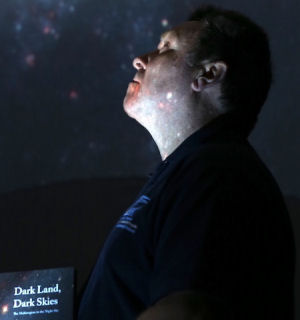
Martin Griffiths, BSc, MSc, FRAS
Will be talking on the topic:-
Mars – A typical planet for Life?
There are currently 10 missions exploring Mars, 2 surface rovers looking for signs of life, 1 helicopter and 7 in orbit. The Chinese rover, Zhurong, is not active at the moment.
As Spock is alleged to have said; “It’s life Jim, but not as we know it”.
Along with the current interest in a manned mission that is being developed it seems like an opportune time to look at Mars in a bit more detail.
There will be a buffet provided for the season so, if you have not yet done so perhaps you can let me know if you are coming so Carol can organise for numbers.
Usual place, upstairs in the Hen & Chicks.
Advance Notice – November meeting
The next meeting is on Mon 27th Nov at 7:30pm
There will be a talk by Martin Griffiths. Some of you may know Martin as he has visited us before. Martin is a professional astronomer and communicator, Fellow of the Royal Astronomical Society, a prolific author and is involved in Dark Skies Wales and Brecon Beacons Dark Sky Initiative.
Also, as proposed at the October meeting, there will be a light buffet available which will be subsidised by the Society.
To celebrate the season we are also extending an invitation to members of the Usk and HoV Societies.
In order to organise the buffet we need to have an idea of numbers. So, if you are going to be coming along could you reply to me at astrogw8@yahoo.com.
Oct Meeting
Great turnout and discussion on “The Oort Cloud” at this weeks meeting (23rd).
In case anyone is interested I have uploaded a pdf copy of the presentation slides onto the web site. LINK
There is a lot of info on the internet but one YouTube video I watched, “Unveiling the Oort Cloud“ by a Dr Nora Bailey, is quite straightforward. LINK
Next Meeting is scheduled for the 4th Monday of November, the 27th. Topic will be advised later.
Hope to see everyone there.
Next Meeting 23rd October
The next meeting will be on Monday 23rd October at 7:30pm. (Apologies for the mess up last month)
Usual place, the upstairs room at the Hen & Chicks, Abergavenny.
The topic for discussion will be “The Oort Cloud”, that sphere of rubble etc., dating from the formation of the solar system, that is thought to surround us.
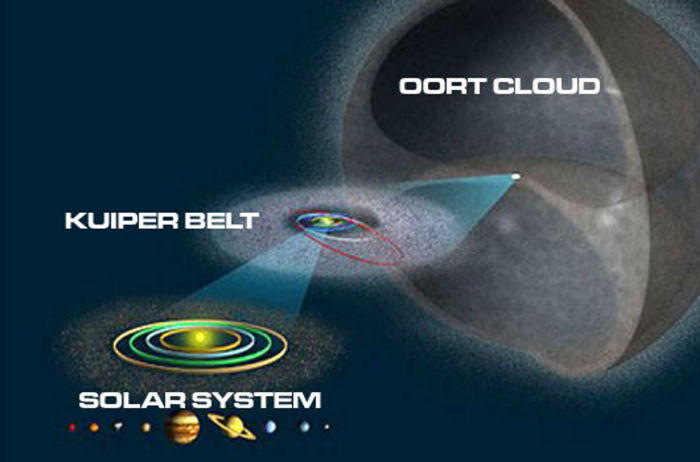
Questions that we may consider:-
What is the Oort Cloud,
Who came up with the idea and why,
Is it real,
How and when did it form,
What effect does it have on us now,
What could happen in the future?
Come along and have your “two penny’s worth”. All views, opinions, questions and maybe answers welcomed!
See you there.