I have changed the theme and may continue to “tinker” with it for a while. So, please excuse me doing so on a live page. Any comments – good/bad/indifferent are welcome.
It is providing difficult (for me anyway!) to get the page menu displaying on the web page so I have used another theme to achieve that.
I’m not overly keen on this set up but it will do as a temporary option for the moment. What do you think?
Author: Kevin
AAS Website update : 20th Oct
Hi everyone.
The website should be back up now. There are still some adjustments need to be made, eg the “Page Tabs” are not showing. However, the Home page is now accessible and the links in the emails should also be working.
Hopefully the other issues will be sorted out and full functionality will be resumed (fingers crossed!).
Any problems you become aware of just drop me a line. Equally, if anyone has suggestions on how the web site could be improved please just let me know and I will investigate. I am particularly interested in how it displays on smart phone screens as many people now use these for internet access.
Apologies for the downtime but I think I am getting there, albeit slowly.
Kevin
AAS Web page Problem
If you have tried looking at our webpage you will know that it is only showing a blank page. Hopefully I will get it working again before to long.
However, the auto email posting system is still working so you should still get notifications of meetings etc.
Sorry for the disruption.
20th Sept, 2021
Monthly Meetings
Just a quick reminder for those who attended the Zoom meeting with Nick last week, and info for those who didn’t.
Nick said that, as we are now in the summer season, there will be no more Zoom meetings in July and August. AAS normally has no meetings in July & August so this follows our usual practice.
It looks as though COVID restrictions are slowly being eased. With a bit of luck face to face meetings may be allowed in a couple of months, for those who feel comfortable with it. I for one, will look forward to it.
Further information and updates will be forthcoming when we have more info.
In the meantime enjoy your summer.
Feb 2021 – Mars Month?
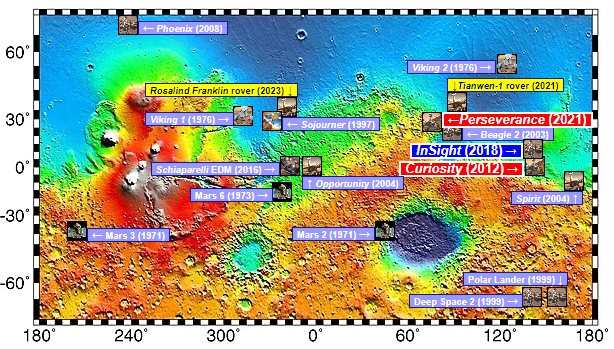
18th February: Nasa has managed to crane their rover and helicopter into the Jezero Crater on Mars. It’s now about 2km from what is thought to be an ancient (that’s 4 billion years ago!) river delta that fed a huge lake. Jezero is a small town in Bosnia with a population of 1100, Jezero means lake in a number of Slavic languages. This crater was named in 2007 by the IAU as part of a project to name significant craters after small towns and villages in the world.
Now we await the testing of Perseverance and Ingenuity’s’ systems and for the science data to start to come back.
Mars2020 now joins the two other visitors to Mars this month:-
1) On the 9th February the successful mission by the UAE to put the Al Amal (Hope) Probe into orbit to study the Martian atmosphere amongst other objectives. This makes the UAE the 5th country to reach Mars and the second to enter orbit on it’s first try; and
2) Followed on the 10th February by the successful insertion of Chinas’ first mission to Mars, Tianwen-1, into orbit. It also carries a rover that is scheduled to land in May or June. The Tianwen-1 rover includes a ground penetrating radar that can “see” up to 100m below the surface.
Emirates Mars Mission – LINK : Tianwen-1 – LINK : Mars2020 – LINK
Something for Feb – Perseverance Rover due at Mars
There is a lot of interest in Mars at the moment from a number of different countries with current missions from China and the UAE and plans by the ESA/Russia, Japan and India in the next 3 or 4 years.
First up look out on the 18th February for the scheduled landing of the NASA Mars Perseverance Rover, if successful it will be another engineering feat using a “sky crane”.

It includes another engineering first, Ingenuity, the first helicopter to operate outside of the Earth. This is a test to check the feasibility of flying a drone on a planet with a much thinner atmosphere, 1% of the thickness of Earth’s atmosphere. It weights 1.8kg and is fitted with counter rotating blades running at 2,400rpm.

Further info:-
Perseverance Mission : Ingenuity Helicopter : Wikipedia page-missions to Mars